Thursday, 15 October 2020

Surviving Lockdown and Freedom


After the 99-day lockdown, it was finally time to get out and do some real exercise

Sunset on Montserrat.
Free to exercise outdoors again.
Free as the birds.

As I mentioned in the last entry, COVID only really hit the world in March. Although we heard about it in the news back in December, nobody took much notice. There was some flu-like virus in some Chinese city that nobody had ever hear of before, but won’t easily forget now. By January, after Christmas holidays, things seemed to be getting more serious. It’s hard for me to think back and remember exactly what was being said at the time and what I thought of it all. I can say this though – I had no idea that it would be so widespread and so terrible in it’s impact on the world. By February there were cases in Europe, and I was getting worried, although the majority of people were saying it was little more than the common cold or flu. By mid-March, there was no room for error and governments around the world reacted how they saw best and put their countries into lockdown. It hit Spain very hard too – one of the worst affected countries in Europe, 2nd only after Italy at the time. Luckily my school were organised and we made the switch to online teaching within 5 days – that thanks to a great management team and some of us working through the weekend getting the new systems up and running and even doing some training. We did a great job I must admit – we retained our students, did tests and even Cambridge exams online, all while teaching via Zoom – I didn’t have any ZoomBombs either! Teachers were extremely lucky to be honest – we could still work. Most of us in the industry kept our jobs and moved online. Sadly, the workers that bore the brunt of the economic fallout were in the transportation, hospitality and retail sectors. Borders were closed between countries (and even between states in some cases!), and no tourists means no money. 78% of people in these industries lost their jobs in Spain between March 11 and April 30th alone. It will take years, if not a decade, for things to go back to normal, if ever. I feel the world has changed so much recently.

It was good to be out and about!
Walking around Sabadell.
Sunset from the back terrace.
We missed the whole of Spring!

Every day was more or less the same though – as we couldn’t leave and go anywhere or do much, life pretty much revolved around mealtimes. Wake up, have breakfast and then do some exercise. Before I knew it, it was lunch time. Watch some TV, maybe even have a short siesta afterwards, then coffee and time to teach some kids. After class it was time for some more exercise then dinner, maybe some TV then bed. Although it was very repetitive, I think the structure helped me from going insane. It was a very tough period for many people, but I must admit that I had it easier than most – I wasn’t alone, I had a nice attic apartment with great views and plenty of space on the terraces (yes, 2 terraces!). Going outside always seemed like an adventure – you’d get to get changed out of your pyjamas and also wear shoes! So, when it was time to go shopping or take the rubbish out, you get the mask on, go outside to an empty or near empty street, feeling like you’ve just woken up from a very long hibernation and were now part of some zombie movie like 28 Days Later. Sometimes, before I got into the habit, I would walk outside without the mask and feel that something was missing, like I’d forgotten to take my keys and I’ve just locked myself out of the house… or worse, that I wasn’t wearing any pants and that’s why people were looking at me weirdly and giving me plenty of space! Now, it's second nature – I used to do the 3-point check before leaving the house; the pat down of your jeans for keys, wallet and phone. The mask is the 4th on the checklist now. After the 99-day lockdown, it was finally time to get out and do some real exercise! I’d been exercising at home, and done some walking outdoors when we were allowed a short bit of freedom between 8pm and 10pm. People that had never walked in their lives hit the streets and walkways, cycling, walking their dogs… there were more people than ever and I didn’t feel exactly safe either. Spain relaxed the laws to let kids out first, then older people and eventually everyone else. There were specific times for each age group that had to be adhered to. Although I think that the government did a good job considering the screwed up situation, many people complained (and still are!) that it hadn’t been handled properly – you don’t have the right to tell us when we can go outside, you can’t make us wear masks, etc. I’m sure that most of these people just needed to complain about something – now, in October, there is no timetabled exercise, so the walkways and paths around the city are back to normal. What people really wanted in Spain, and I’m sure many other places too, was to just go to the bar, sit in the sun and drink with friends. I was looking forward to making up for losing the whole of Spring!

Montserrat!
Walking to the top from Vacarisses.
No people and no queues.
The view from the top!

July was here and we could finally move around more, between cities rather than just to the supermarket. This meant some real hiking – finally! I felt pretty fit, considering the 3 months lockdown, and when it came to the test, I was very happy. I had been planning a big 2-week hike along the Pyrenees, following the GR-11 route on the Spanish side, so I needed some practice first. Time to dust off the boots (and the camera of course!) This practice come in the form of Montserrat. You can drive to the monastery, or even get a cable car or tram, but I wanted to walk it, bottom to top. I started the walk in the sleepy village of Vacarisses, a small ‘urbanisation’ of houses and barky dogs, but in a lovely part of the countryside – you can see the Magic Mountain from nearly everywhere in the village. The walk was fairly easy to start off with, which was good as it was mid-July and 30c already. It was about 5kms to the town of Ministrol de Montserrat, which sits at the bottom of the mountain. Quick stop for water restocking and a snack for energy before following the trail through the town square and up towards Montserrat itself. I’d never hiked from bottom to top before, and although the path was easy to follow, it wasn’t the easiest walk I’ve ever done! When you look at Montserrat, it looks tall and daunting with the jagged peaks and tree shrouded sides. You wouldn’t think that you could walk up it just by looking at it. There was a path, but it was quite dusty and rocky, and in some places washed away by rain or the amount of people doing this hike. With a few stops on the way, my hiking partner and I reached the tree line and found an easier way to go, getting out of the baking sun a little. We reached the top, a little tired but very sweaty! It was quite an achievement I think – July temperatures, first time doing it and also because the most walking we’d done in 3 months was taking the rubbish out. Well done us!

Santa Cova de Montserrat.
Welcome to the Abbey of Montserrat.
The empty patio of the abbey.
View of Montserrat from Ministrol.

It was a Sunday and normally this place was packed. It was about 2pm and there was nobody around. A few people were having coffee at the one place that was open, a few others in the monastery itself, but I could nearly count everyone on my fingers. This made the place a little spooky, but great for photos! We had a coffee and some sandwiches, walked around the buildings, noting that the cable car and rack railway were shut – another reason why not people weren't here. Taking advantage of the lull in tourism here, we walked straight into the church without queuing, to get a look at the inside and also to see the statue of the virgin Montserrat. Santa Maria de Montserrat Abbey was founded in the 11th century (no cable cars then!) and is still a working place of worship today, with 80 resident monks. What you see today isn’t 900 years old, it was rebuilt between the 19th and 20th centuries, but is a truly impressive sight. I just love coming up here. Montserrat (or Montse as I call her), is an icon that is the patron saint of Catalonia, sharing the honour with Sant Jordi (Saint George in English). Some people believe that the wooden statue was carved in Jerusalem in the early days of the Church, but it is more likely a Romanesque sculpture dating from the late 12th century. It was given to the abbey in 1881 by Pope Leo XIII, and is now called La Moreneta by the Catalans ("the little dark-skinned one" or "the little dark one"), which is a bit funny to me, but it also used to have an inscription on the frame that read “Nigra Sum Sed Formosa" (Latin: I am Black, but Beautiful).

The view from Sant Salvador de les Espases.
Sant Salvador de les Espases.
I'm ready for the GR-11.

Having taken plenty of photos, stopped sweating somewhat and paid our respects, we headed back down. The walk back down was fairly quick, and much cooler too. We reached Ministrol and stopped for a hard-earned ice-cream. Being Sunday, the trains aren’t as frequent as during the week, and as I ate my calippo, I checked the trains only to find out that we probably wouldn’t make it for the scheduled train. The train after this was more than an hour’s wait. Welcome to Renfe on Sunday! There are 2 companies that operate here in Catalonia – the national company Renfe, known for their stinky, dirty carriages and poor service; and the local state-run company, the Ferrocarrils de la Generalitat de Catalunya, which has a much better reputation for being on-time and also cleaner. Luckily for us, there is an FGC station in town, which would also take us home – just a slightly longer way. Feeling more relaxed that we didn’t have to run 5kms to the other station, we casually strolled to the nearer one and got on our train without waiting much at all. After such a hot day (I think it hit 35c), I was tired, hot and sweaty, and even a little sore to be honest. I know that my planned hike would be much tougher – 20km or more, every day, for 10 days. This was a good bit of training though and I felt confident that I would be able to do it! I felt so confident that I actually hiked up Montserrat the following week – all the way this time, all 20kms of it, in similar heat. I also squeezed in another hike to Sant Salvador de les Espases, a little hermitage with a great view of Montserrat. I was finally ready to tackle the GR-11.

Montserrat in the summer.

Remember to also follow me on Instagram at: https://www.instagram.com/myuncletravellingmatt MyUncleTravellingMatt. July 2020.

Sunday, 20 September 2020

Christmas and Covid


It's Christmas!
Christmas decorations in the city.
I’m sitting at home writing this blog post about December, reflecting on all that has happened this year. I know, it’s now September, but as we all know it has been a crazy 2020. Way back in December 2019, this COVID virus was barely known, I can’t even remember if it was in the news at all. Everything was normal, people were going on their Christmas holidays, buying furniture, going on planes, taking everything for granted – and in a way we should be able to do these things. We should be able to depend on a job, a roof over our heads, be allowed to walk the streets and be able to live. I know many, many places are doing it harder than where I am in Spain, but it hasn’t been easy here. In Europe, if not the World, we had one of the toughest lockdowns – it was swift and brutal, but I still think, absolutely necessary for everyone’s sake. We were confined to our homes, masks on in the streets and trips were limited to the supermarket trips, taking the rubbish out and taking the dog for a walk (if you were lucky enough to have one). Fines for breaking the rules were meted out at €600 a pop. I managed to keep my job, we all moved to online teaching within a week and kept our students. I had some money saved and didn’t spend much at all during the quarantine, so came out of it better and also a little fitter as there wasn’t much else to do at home. With the second wave already here though, I fear what the rest of the year (or two) will bring. When will this horrible pandemic end?


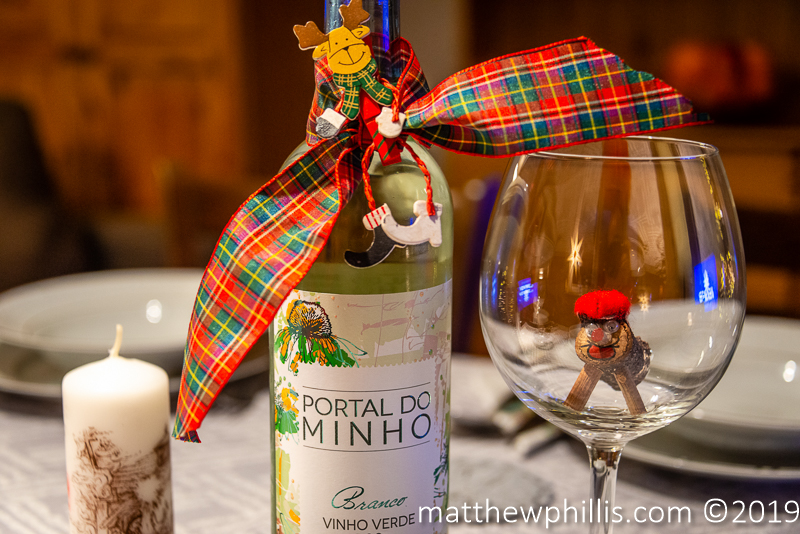
Good wine and a little something from Catalonia.

The Christmas Nativity scene.

C'mon guys, it's Christmas!

Making Pierogi.
Little did we know way back in 2019, when everything was so normal. Myself included. So, we made our Christmas plans and flew to Poland for 3 weeks, blissfully unaware. Christmas time in Poland is great – it’s cold and really feels like a traditional Christmas that we all know and love. I also love being outdoors at Christmas, like a Sydney Christmas, having a BBQ and sitting around on the beach. In Poland, it’s all about the food though – a traditional Polish Christmas has 12 dishes – and many of them fishy. The main celebration is on Christmas Eve, or 'Wigilia,' and some of the dishes served are Pierniki (gingerbread), Barszcz Czerwone z Uszkami (Beetroot soup with dumplings) and Jarzynowa SaÅ‚atka (potato or vegetable salad). There is also lots of ham and good Polish pickles too, so I was in heaven. The day before, lots of the family got together to form a production line, pumping out the tiny little mushroom dumplings, like mini pierogi, called 'uszkami'. I got involved and within minutes was an absolute pro! I proclaimed this new status, I said it was easy, and so I was then stuck there for the rest of the night! It was fine, as the more you made the more you could eat the next day in the soup! Carp is also very traditional here – there was fried carp, carp jelly and also boiled carp heads. In fact, most of the kitchen was full of fish in various states most of the time. Luckily though, there was no live fish swimming in the bathtub – people my age remember this vividly, with fond memories while laughing at how silly it seems now. Luckily, I didn’t have to kill anything for our Christmas dinner.

Poznan in Winter - cold but still beautiful.

Winter sunsets

Walking in the park at sunset.

Cozy bars in Poznan.
As I’ve mentioned in a previous post, PoznaÅ„ is a lovely city, very beautiful and with plenty of things to see and do. Although it was Winter and was very cold and dark by 3pm, there were still things to see and do. One of the things was the Christmas nativity scene in a church in the centre. Although nothing to knock your socks off, it was a full-sized depicture of the birth of Christ – there were animals, shepherds, the manger - everything, even some angels. If that’s not your bag, what you can do is head to the old market square for the Christmas markets. As with all markets, there are local arts and crafts, as well as produce. There were hams and bread, pickles and jams, but I loved the cheese – Oscypek salted sheep cheese from the Tatra Mountains. It looked like a little loaf of cheese, the outside a dark yellow colour and patterned, but it’s completely edible too. When walking around the markets gets too cold, maybe it’s time to head into a comfy little bar or restaurant somewhere on the square. During the summer months, this typical, Central European square is filled with outdoor seating and dining areas, where people enjoy the view and the weather. During the colder months people head inside, where the Poles really know how to make something cool and cosy at the same time. There are loads of bars and restaurants – my amazement of the variety never ceases. Japanese, Thai, Vietnamese, steak houses, pizza places and burger joints are everywhere, not to mention the bars and microbreweries! My favourite big brand beer in Poland is Lech, which is actually from Poznan, but if you’re into craft beer, then never fear – there is an absolute abundance of that too, as the craze has hit Poland as much as anywhere else in the world. Not only are these places great inside, their facades are also pretty cool and their names original. There is one bar called HashtagHashtag (or #Hashtag), Whisky in the Jar (an American whiskey and steakhouse that plays good rock music) and Jabberwocky Craft Beer. Even if you went to a different bar each day, you’d be here for some time and wouldn’t even get bored by repeating!

Christmas tree in the Old Market Square.

Even Lenin is getting into the mood.

Poznan city.

The 1,000 year old oaks - Lech, Czech and Rus.
Before we left for Spain, we decided to take a short weekend drive and see some other things around the city. Within an hour’s drive from PoznaÅ„, winding your way along country roads, you’ll find Rogalin Palace, an 18th Century Baroque Palace. built between 1768 and 73 (which makes it older than British settlement in Australia), it is a rambling and very beautiful mansion, built for the RaczyÅ„ski family. Unfortunately it was closed, but that was to be expected at this time of year and on a Sunday, we walked around the grounds and enjoyed the beauty of it and the peace and quiet of the gardens. The last owner of the estate was Count Edward Bernard RaczyÅ„ski, who in 1979–1986 was President of the Polish Republic in exile. His sarcophagus is in the RaczyÅ„ski Mausoleum, just across the road from the house. After his death the house came into the guardianship of the RaczyÅ„ski Family Foundation, and its president is the Director of the National Museum in PoznaÅ„. It is famous for its art gallery in the main building, which houses painting by Monet along with famous Jan Matejko's large-size painting Joanna d'Arc. The garden is also impressive, as it has 3 huge oak trees that are more than 1,000 years old – each with their own names; Lech (like the beer), Czech and Rus. It is amazing that trees can live that long and that such huge organisms come from such a small seed. Not far away was another little piece of history, Kórnik Castle. Built in the 14th century, but remodelled in the 18th and had many features of Gothic Revival, including the red brick tower which stands out as very different to the rest of the building. It is a squat, four cornered castle, surrounded by a little moat with a draw bridge. Again, being a Sunday, it was closed, but we were able to appreciate this beautiful, National Heritage building of Poland. Something unique to this castle is the Kórnik Arboretum, founded by Count Tytus DziaÅ‚yÅ„ski in the first half of the 19th century. It is the oldest and largest Arboretum in Poland, covering around 40 hectares and containing more than 3300 species of trees and shrubs. It was a little cold to go walking the grounds too far, as they are immense, so instead we grabbed a hot chocolate and then headed back to the car for the journey home – it was nearly 4pm and getting dark after all.

Kórnik Castle.

The beautiful Rogalin Palace.

Walking around Poznan at sunset time (4pm!).

Merry Christmas Poznan.
It was January and time to go home. Christmas and New Years in Poland had been fun and relaxing. We were heading back into the long stretch of teaching that is the 2nd term, but it would be a very long, difficult and different term. We’d planned a great trip for Easter; Lithuania and Latvia, 2 new countries for us both. Sadly, everything was cancelled and we got stuck at home. It took ages for the tickets to be refunded, but that wasn’t the most upsetting thing. Luckily we still have our jobs but there were vast changes in the world of teaching. It would change the profession in a way nobody had seen before and I think these changes will last. Everything has moved online, there are more and more courses being offered, people learning to programme on their phones in the hope of getting a better job. Times have never moved so fast and it will be hard keeping up with everything. It’s hard not to feel old when things are moving so fast – gone are the days when you can stay in the same job for the rest of your life. The Baby Boomer generation were lucky in that case, most of them have made it through to retirement (just), but my generation will have to re-train and re-educate themselves, change careers, more than once. For the kids that are leaving school and entering University, that is a whole unknown world. We have to keep moving and learning, never stopping, to survive this new world.

Add caption

Remember to also follow me on Instagram at:

https://www.instagram.com/myuncletravellingmatt


MyUncleTravellingMatt. December 2019.

Sunday, 14 June 2020

Weekend in Banyoles

Panta de Sau
Time for a break - blue skies in December!
Long way down... or up!
The Pantà de Sau.
Writing this blog, I can appreciate even more what it was like to just go out and do things. To get in your car, drive off somewhere, visit beautiful places and do things we used to see as 'normal.' It's been more than 2 months in strict quarantine lock-down here in Spain, and it hasn't been easy. Up until recently, the only outside time we had here was for vital trips to the supermarket, taking out the rubbish, or walking the dog. I don't have a dog, so I it was 2 out of 3. Spain has been one of the hardest hit countries, with 240,000 confirmed cases and 27,00 deaths. Italy, the US and the UK are also devastated by this latest pandemic. Slowly things have eased, by allowing children outside to walk between certain times. Writing this blog now in June, Spain has just opened up enough for bars and restaurants to open and for people to leave their houses normally. All with masks on and capacity limits for shops, but it is nearly back to normal. Work has continued for me - I'm one of the lucky ones being able to work online. For some it has been much worse. But it is good to reflect on past times, past trips and back to times when you were happy and free. Appreciate what you had and have now, always. Back in December, before I knew what was only months away, we had a long weekend and thought nothing about taking a trip up north. The plan was to visit and stay in Banyoles, a town on a lake in the province of Girona. I'd been here once, and never really saw much of the town itself. It's very close to many interesting and beautiful places, like Besalu, Castellfollit de la Roca and Olot. All of these places were on the list for this trip too. We got in the car and heading off to enjoy an autumn long weekend.
The Pantà de Sau - you can just see the church roof.

The dam at Sau.
Don't get too close!
The Sallent waterfall.
Although I didn't have a strict, day by day plan, I did have places that I wanted to visit while up here. Although not that far from Sabadell (nothing is that far by Australian standards!), Banyoles is different as there are lots of small mountains and hills in the area, and it is generally just less populated and more rural. I drove up the C-17 towards Vic, and instead of continuing up directly to Olot, I decided to take a diversion. Exiting the highway, we got onto a small national road that took us into the national park. Winding our way through the forest, the treeline broke and we saw what I was looking for - the Sau reservoir. I say 'looking for,' though it wasn't lost - what I was looking for though was the church that is sometimes lost under the water. Back in 1962, when the dam was built, the village of Sant Romà de Sau was evacuated and flooded. When the water level is low enough you can see the tower sticking out - and today I was lucky! I have meant to visit this place for so long and it felt good coming here at last - it's very beautiful and I'd love to come back here and walk around the area more, maybe even do some water sports on the reservoir. The detour wasn't over though - while we were here on this small, windy road, there were 2 other places I put on the list to visit, before getting back to the big, boring highway. The Salt de Sallent waterfall was a short drive up the road, so we got back on the road for a few minutes then parked the car and walked the rest of the way. A very easy walk, but it came with spectacular views as the path was right on the edge of a high cliff. The view, flat mountains with rocky faces and trees as far as you can see, reminded me of the Blue Mountains just outside of Sydney. Within minutes we had reached the waterfall which spectacularly spilled out over the edge and dropped 328 feet (100m) onto the rocks below. There was a fair bit of walking to be done around here, but it was nearly lunchtime already and I was getting hungry. Back to the car and onto the next stop - Rupit.
Beautiful contryside.
The stone houses of Rupit.
Rupit during the Golden Hour.
Straight to Instsgram.
It was getting a little late for lunch to be honest. I knew this by the rumble in my belly and by how few parking spaces there were anywhere close to Rupit. The locals like to eat at 2pm - start eating that is, as this process can and usually does take some time (especially for family lunches). We managed to find a parking spot (paid however - there was no escaping it) and wander into the village and grab a space at the bar. After a lovely little sandwich and a beer, I needed a walk and to take some photos before the sun set. Being Winter, the sun was already dipping low by 4pm, but the light was perfect for photos. Rupit is a medieval village and nearly all of the houses and streets are stone - but to get to the old part of the village you have to cross a swaying suspension bridge built to connect this part with the new part of town and the main road. There was a queue of people to cross, but then I read that there was a limit of 10 people at a time. I figured that was the reason for the hold up and was ok with waiting. Something I quickly learned here was that 1. People can't count to 10, and 2. People don't seem to care about anyone else but themselves! Ok, so I knew the second one already, and to be honest I think number 1 is more influenced by number 2 rather than counting ability. People strolled over the bridge in large groups, some for group photos, others, it seemed, were just completely ignorant. Then there were the Instagram girls and their boyfriends. Sadly the bridge didn't fall this day, it held far more than it should have and for far longer too. I crossed, snapped a quick picture in the middle and then hurried over to the other side, trying not to make the structure bounce and move too much (just enough to blur those Instagram shots maybe). I know I sound angry, but I'm not really - I just don't have much patience for absolute tourists. The village itself was gorgeous though and you can see why it attracts so many people. Most of the charming stone houses are from the 16th and 17th century, and seem to hang over the rocky outcropping in places. Although quite small, I felt that I could wander around for hours - but we didn't have hours, but we did the walk to the 'ermita Santa Magdalena,' took some more photos and then went back to the car.
Rupit through the trees.
Medieval Rupit.
The caga tio Christmas log and his cat.
A beautiful December sunset.
We drove towards Banyoles and our resting place for the night, but on the way had to stop and appreciate the view. The sun was just about below the horizon and this gave the surrounding countryside the most beautiful orange and purple glow. It was worth stopping, even if it was on a small country road with nowhere really to park. I was careful as I pulled over, put the hazards on and then snapped a couple of pics. Totally worth it. The drive to Banyoles was uneventful in the dark - we found some parking, the hostel, checked in and had a lovely dinner out. The next morning we headed out for breakfast before making our way to Olot, the city of volcanoes. Although there isn't that much to see and do in this city, it's no Barcelona or even Girona, the area is littered with extinct volcanoes - this is its draw point. The area is called the Parque Natural de la Zona Volcánica de la Garrotxa (The La Garrotxa Volcanic Zone National Park), and area of green hills and small mountains that were once active lava spewers. I parked the car and we started the short walk up to one such volcano, the Volcà del Montsacopa, which has a 17th century church in its crater. It was an easy walk, there was an easy path to the top, and before you know it you can see everything. The ground is covered in little volcanic stone, from the size of golf balls to tiny little pebbles, and in various colours too, from deep red to grey and even black. A quick circuit of the rim gives you a lovely view of the countryside. You can get an even better view from the stone towers built right on the edge, and also grab a beer at the cute little church cafe. I was already getting hungry and we decided to get some tapas in the centre. The town centre was nice and very busy - it was beer o'clock and nobody had even heard of Covid yet. Those were the days!
The Ermita Santa Magdalena
What a perfect way to end the day.
A stone tower on the edge of the volcano.
Beer o'clock in Olot.
We got back in the afternoon, parked the car and decided to head out for a walk around the Banyoles lake. Still and mirror-like, the deep blue colour of the lake was stunning. It was the perfect time to come here to be honest - the colours were just right. White capped mountains in the distance, golden leaves clinging to the trees and red ones already falling, and the blue of the sky and water. It was so perfect that I started wondering where else you could enjoy such weather in Winter? Not many places, that's for sure. The lake is natural too, formed by moving tectonic plates, and is the largest in Catalonia. It was also the venue for the 1992 Barcelona Olympics rowing events - and today there were some rowers skimming their way over the calm waters. Apart from the lovely views of trees, mountains and water, there are also the little houses that sit on the shore. Although I'm not entirely sure what purpose they serve, whether they are small boat houses or summer vacation huts, they are great for photos. I love this lake - it's so peaceful, yet full of life and activity, human and animal. Banyoles only has a population of 17,000 people and I'm sure that most of them were down here this day, enjoying what makes their town special. It'd been a busy day and so it was time for a relaxing dinner in the centre and then to bed - tomorrow was the last day of this great weekend break and there was still a little to do. 
Banyoles at sunset.
Banyoles lake.
Some buildings in Olot.
Olot's church.
On the list was Besalú and Castellfollit de la Roca, both just a short drive from here and on the way home too. Besalú is one of my favourite places in this country and I would never grow tired of coming back and taking even more photos. If you come here, you will know why. The town was very important during the Middles Ages; it was the capital of the area (called Besalú county), and thankfully most of the buildings from this time still exist. Designated as a historical national property in 1966, the town retains its 12th Century Romanesque bridge and the church of Sant Pere, which dates back to 1003. The bridge is the main focus point of the town - its the first and last thing you see when you come here and it always makes you take one more photo. Although the town is full of souvenir shops, a lot of the things you can buy aren't just tack, there is plenty of lovely artwork and handcrafts too. There are a few nice squares in town, as is the Spanish way, all with numerous bars full of people enjoying life (as is the Spanish way). Always a lovely place to come and see.
The 12th century bridge.
Besalu's 11th century church.
Just us and the cats.
The view from the church.
The last place that we stopped at was Castellfollit de la Roca. Another town shaped by the volcanoes in the area, this gorgeous little town sits on a finger of rock 1km long and 50m high at its end. The stone houses hang over the smooth, black volcanic rock that was formed by two overlapping lava flows I don't know how many millions of years ago. On the streets there isn't much room for anything - barely enough room to walk next to someone in parts. This town never seems busy, but then again I don't think too many people live here and most tourists tend to go to the more well known Besalú. It was basically just us and a few cats on the street as we wandered down to the edge of town, to the church and lookout point. You get a stunning view from here, looking out over the valley and the river. If you want a better view, talk to the friendly guy in the church who will give you a quick tour and then let you climb the bell tower. Looking back over the village, it is basically one street with houses on either side, all trying to hang on and not fall off the edge. It had been a great weekend, a much needed break in December. The weather had been kind, the food good and the road a pleasure to drive on. With restrictions being lifted slowly but surely here in Spain, it will soon be time for little trips like this. And more. Until then!
Castellfollit de la Roca on its basalt peninsula.
Castellfollit de la Roca.
Remember to also follow me on Instagram at:

MyUncleTravellingMatt. December 2019.

New Zealand Southland - Part 2

 Live the van life while you have it – no regrets The landscape on the South Island is simply stunning The view from Mount Cook road This wa...