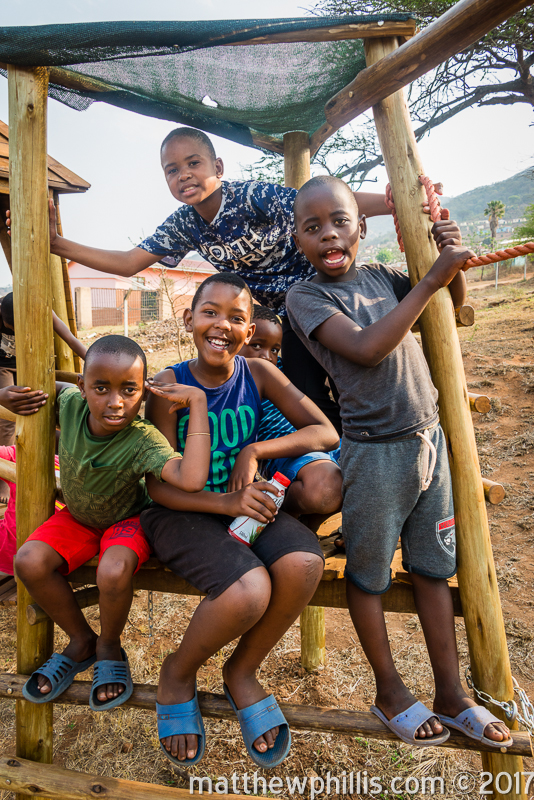
|
| Sunset in the Valley of 1000 Hills. |
When you're living in another country, travelling around and posting photos on social media, everyone thinks it must be so awesome, that everything is going your way. It's the Facebook life after all. You have to take the good with the bad in anything, but also make the bad good and make the good last. I've been living in the Valley of 1000 Hills for nearly 4 months now, visited Durban and Johannesburg and I have also been catching the local public transport - and nothing in the least bit dangerous has happened to me. There are some parts of town that I wouldn't go, but just walking down the streets I haven't been worried. South Africa is often said to be very dangerous, but I think some things are overrated - much like South America. The only real time I felt scared in all my time there was in Bolivia, outside the San Pedro Prison in La Paz. I had a guy come up to me and offer a personal tour on the inside and a few people in the plaza were staring at me and my camera, I even heard a couple of guys talking about me and started to follow me before I took off... scary. So far South Africa has been ok - but something happened to me last week that I have to mention here, as it's a story too good not to bring up - but it nearly wasn't.
I was travelling back from Durban to where I was staying with friends in a place called Howick, using the local 'taxis' as per normal. I was walking between taxi ranks to get my second one for the day when a guy approached me, saying "howzit" (The SA equivalent of G'day) and being way too friendly. I was polite back but kept walking, but knew something was wrong when he grabbed my belt from the front - the other hand was going for my phone! I grabbed him and grappled to get my phone back, but he'd passed it to an accomplice, so I grabbed him too and we all wrestled and jostled to grab my budget smart phone. We all ended up on the ground grabbing and kicking each other - they got up first and pulled out knives and threatened to stab me. This shit was getting real and nearly took all the fight out of me... nearly. I followed them, yelling at them, swearing at them, hoping someone would help me as it was 3pm and I was on the main road - this whole thing happened in front of a busy petrol station. Somebody did. A little Golf with dark-tinted windows pulled up onto the curb, a guy got out and asked me what had happened. I pointed to the thieves and told him that they'd taken my phone. "Which guys? These ones?" he asked. The next thing was something out of a movie - he whipped out a pistol from the back of his pants, cocked it and pointed it straight at the perpetrators, walking slowly towards them. "Put it down," was all he said and they dropped it and scarpered. I grabbed my phone, not quite believing what had just happened - the guy told me to jump in the car and he would take me where I wanted to go. The thought that he would then rob me crossed my mind, but with the adrenaline and disbelief still cursing through my body, I just got in. He handed the pistol to the driver, who took the loaded clip out (it WAS real!) and stashed the weapon back under the seat. They dropped me off and wished me well, telling me that they can't let shit like that happen to tourists here or nobody will come anymore. So right. I thanked them profusely, shaking their hands, thanking them again. Now I haven't mentioned what colour these people were, the muggers or my saviours - but does it matter? This is not a race issue, simply a crime issue (and more deeply an education and economic issue). One minute you're angry and people for being so low as to just mug someone violently on the street, yet the next moment you're being saved by good people - what a World we live in. I still believe in putting up a fight and standing up to these people, to a point - no point in getting stabbed for a mobile.
 |
| Afternoon light on the clouds after a storm. |
 |
| Just beautiful. |
 |
| Welcome to Durban. |
 |
| Human Rights monument in Durban. |
 |
| The Zulu alarm clock. |
 |
| A lizard basking in the afternoon sun. |
 |
| The family's chickens. |
 |
| The family goats. |
 |
| Wave watching in Durban. |
 |
| It's a big ocean out there. |
 |
| Natural medicines in Durban. |
 |
| It't not all animal products - weird plants too. |
Living in the Valley of 1000 Hills is beautiful, peaceful and very relaxing - great for hiking, taking photos or just enjoying the nothingness of it - but sometimes you have to head into the city for a bit of life and activity. When you get off the taxi, you're right in the middle of it - it's all going on here! There are cars everywhere, taxi guys yelling out the window trying to get more passengers, people cooking meat, selling vegetables as well as bits bobs for the house, and every building on the streets is a shop front that is crowded with people - not to mention all the fast food joints this country has, that famous 3 letter US fast food chain is by far the most popular. What I'd specifically come in to see was the natural medicine markets and Victoria Markets. Natural medicine in Africa still plays a big part in many people's life, in the same way that Asian medicine does with the Chinese people even though technology and science has become the 'new religion.' Walking up the stairs and across the pedestrian bridge over the main road in Durban, people bustling all around, the smell hit before I saw the first stalls. Many of these products are plant-based - roots, leaves and bark - but many are also animal parts. Crocodiles, snakes, lizards and large birds are just some of the things you see here and the smell is something that I can't describe - it's not a rotten smell, like bad eggs or off meat even, but more like a musty, bloody smell - hard to describe - but neither is it over-powering. The fresh air at the other side of the bridge was very sweet to breathe again after my short trip through this place. I managed to take a few pictures, asking one woman for a photo who let me take pictures of her art (she made instruments out of softdrink cans) but not of her. Another man got slightly angry at me, telling me and my friend in Zulu (native tongue of my friend and guide Puseletso) that taking photos would take away the potency of his medicines - but he also explained that it would be ok if I bought some of his products or just gave him some money. Funny how that works.
 |
| Mandella Mania! |
 |
| Smelly natural medicines at the markets in Durban. |
 |
| The Skycar to the top of the stadium. |
 |
| Durban's Sister cities. |
 |
| Moses Mabhida Stadium. |
 |
| Durban's line stretch of beach. |
 |
| Street art in Johannesburg. |
 |
| One of the now defunct gold mines in Jo'burg. |
 |
| The fort at Constitution Hill with the Telkom Tower int he background. |
 |
| A guard post on the wall at Constitution Hill. |
 |
| Vodacom Tower. |
 |
| Constitution Hill. |
 |
| One of the few beautiful buildings in Jo'burg - The Johannesburg City Council. |
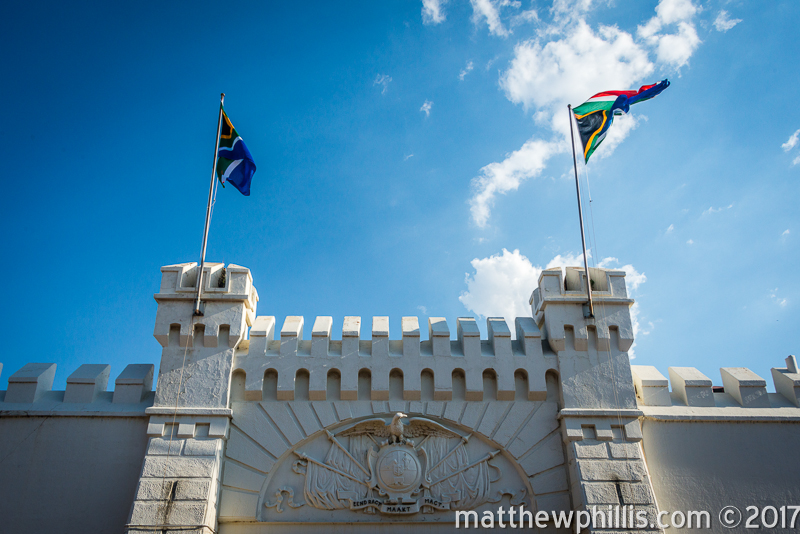 |
| The large gate for the fort at Constitution Hill |
 |
| The local take away store. |
 |
| Jacarandas and the city skyline. |
 |
| Sunset over the city of Johannesburg.. |
 |
| Sunset over The Valley of 1000 Hills. |