Tuesday, 4 October 2016

Transylvania

My view for the next 4 weeks from my hotel room. Not bad at all.
Bringing in the hay.
My local bar and the owner.
Within 30 minutes of driving from the city centre we were already in the countryside of Bucharest. The city has grown a lot recently but every city comes to an end and I was heading North up into the mountains. The Summer Camp was in a tiny village called Podu Dambovitei, itself nothing special, but it's location was - basically on the doorstep of Transylvania. It was 30 minutes to Bran, home of Bran Castle and the legendary Vlad Tepes, and a further 10 minutes to Rasnov, a pretty town with it's own fortress. A bit further along the road and you'd be in Brasov, one of the most beautiful cities in the whole of Romania. Although I would be working for the next 4 weeks with kids, I promised myself to get out and do things, see the countryside around the village by foot if need be. The kids arrived on Sunday afternoon and work continued until they left on Saturday afternoon, leaving me with the time after lunch on Saturday until 5pm on Sunday when the next group would arrive - not much time, but enough for a bit of exploration.

The mountains of the Bran Pass.
The local church.
A fancy roof.
Arriving at the hotel which would be my home for the next 4 weeks, I stared around like a country person does in a new city at all the tall glass buildings, except for me it was the pure greeness of the trees and the impressive mountains that straddled the town. Podu sits on the road that leads through the pass from Campulung in the South to Bran and the castle that protects this passage, then onward to Brasov in the North. Without a big motorway running this way, the road through town was it so it was busy with logging trucks, caravans of families on holiday as well as your normal cars and motorbikes. I had to get out immediately, so I dropped my things and grabbed my camera and headed out to enjoy it. Local farmers were gathering in their hay and piling it up on 20ft haystacks, using only hand tools with hard-word and sweat, beekeepers were collecting the labours of their winged livestock, the sun was shining in the way that it only does in the mountains - this was exactly what I wanted, I was in heaven, I could move here today. Well, maybe not, but I felt comfortable, relaxed and happy. Sitting in my room that night after dinner, it all started to sink in - I was in the mountains in Romania, a wonderful view from my balcony on the 4th floor, I would get the chance to explore and hike the area as well as see some beautiful towns and cities, all while being paid for it. Not a bad deal really, and one I would fully take advantage of over the next 6 weeks.

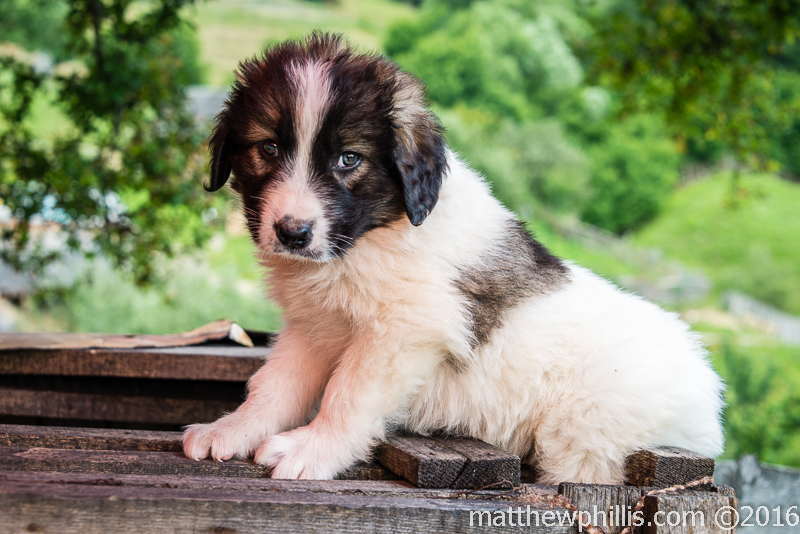
Carpathian Shepherd Dog - cute now but they grow to be enormous.
Notice the bear warning.
No money, no honey.
Over the next few weeks I did a bit of walking around the area, the Piatra Craiului National Parc was only a a 20 minute walk from my hotel. The sign at the entrance warns you of bears, and although I am scared of bears I was kind of hoping to see one. That feeling is strange - scared of something but wanting to see it at the same time and hopefully get a picture of two in. I brings back memories of Nepal and the time I spent on a 3 day trek in the jungle on foot. The guide warned us about rhinos, tigers and elephants and what to do if we saw one - climb a tree (at least 6ft tall to avoid the horn) or run for rhinos, stay still and stare it down for tigers and for elephants you just have to pray. There are bears in Nepal too and we were told to get together, yell and make lots of noise so that we look like one big, noisy animal, and also throw things at it if you can. Same goes for other bears really, but I would love/hate to come across a Grizzly in Canada - if tactic #1 doesn't work, you're gonna get eaten, full stop. Luckily (or unluckily) for me I didn't see any bears - I also found a large cave and explored it, but again, no bears or even bats. The cave was huge and I was alone, my mobile flashlight my only source of light, and as I went further in the space became smaller and the air colder and colder - the mind can be an amazing thing and also your worst enemy. I didn't quite run but I did leave quicker than I came in. The mountains and scenery around this area is breaktaking to say the least - so green and so mountainous at the same time. When I think of places like this in the World, I think of Andorra in the summertime, nestled in the Pyrenees, or another little European country called Switzerland. There are two kinds of people in this world, Cat or Dog Lovers, right? Well, I love both for different reasons, but with the questions of Mountains versus Beach, the answer is clear, no doubt about it.

Mountains or Beach? No question really.
The beautiful (but quiet) town of Rasnov.
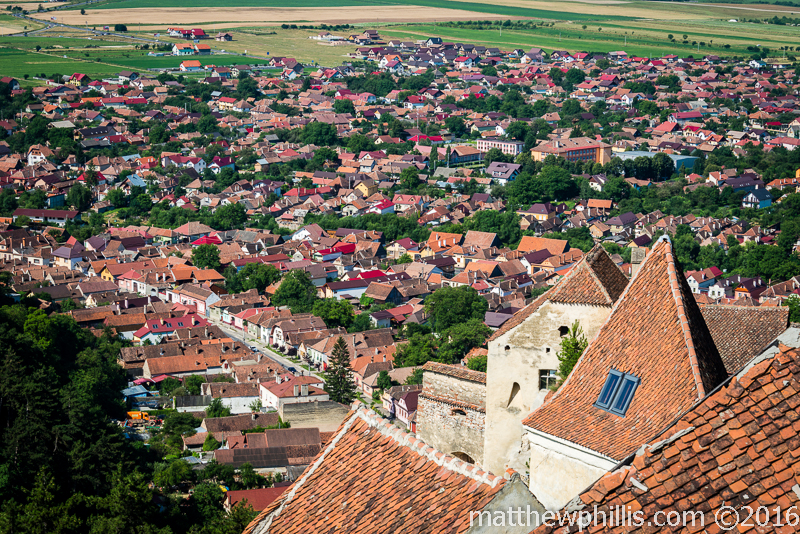
The view from Rasnov Fortress.
The people in Romania are lovely, and in the big cities people speak a little English, but here in the countryside is another story. I visited the local bar for a drink and I was all of a sudden the centre of attention - a foreigner in this tiny village, walking and with a large camera. What could there be photograph here, they were all wondering I'm sure - sometimes you don't know what you've got. Nobody spoke English, even the young waitress that was forced to talk to me by the grizzly farmers who thought that just because she was young she could speak English (or maybe there was something else going on that I didn't realise). Failing this, I asked if they spoke Spanish and to my surprise one guy did - he also spoke Italian - so we had a fine conversation in 4 languages! I found that people here speak Spanish not only because it's similar and a lot of Romanians go to Spain to study or for work, but they also watch a lot of South American Soaps ("Estoy embarasada con tu hermano!"). This said, not everyone speaks another language here - a farmer I met could only speak the local lingo, but that didn't stop the friendliness of the Romanians, nor did it stop him from trying to sell me a Romanian Sheep Dog puppy! I got on the bus to Rasnov to visit the fortress one weekend and while on the bus I had a conversation with a local woman whose Spanish was better than mine, which isn't saying much really, but hers was great and so we chatted while the mountains went past and we did hairpin turn after hairpin turn through the mountain pass. The other passengers didn't bat an eyelid at this exchange, but I couldn't help but stare at them with their scythes stacked up inside the bus.

Romania love these 'Hollywood' signs.
Japanese tourist.
Guarding the gatehouse.
Rasnov Citadel is quite an impressive sight, in fact better than being up close to the castle itself really - it sits on the side of a mountain looking over the town and protecting the Bran Pass. Built in the 13th Century, it was the safe haven for the locals if and when an army came through the pass. It came under attack in 1335 by the Tatars and was besieged in 1421 by the Ottomans, but was only conquered once in it's history in 1612 and this was only due to lack of water in the citadel - a 500ft well was dug shortly after this. There is a legend with this well - they says that it was dug by two Turkish prisoners who were offered their freedom for doing so. They dug for 17 years, writing poems and verses from the Quran on the stones all the way down the wall, which can still be seen today (although I didn't know this before going). The fate of the prisoners is unknown, some people say that they were released while others say they were killed. The inside of the fortress is interesting but quite run-down and there is very little information about anything - there are plenty of shops selling tourist tack though! The best thing about the citadel is the price, only 3 euros, and the view you get from the top looking down at the town, or from the town looking up at the Citadel itself and the big, Hollywood-like sign that read "Rasnov."

Castle Bran guarding the Bran Pass.
One of the royal rooms in Castle Bran.
Dracula souvenirs.
Bran Castle was next on the list for the weekend - I had to do both in the same day as there wouldn't be another chance for this much time off before finishing work. Bran is a town just a little South of Rasnov, and although smaller in size, it was much, much busier. There is one reason for this - Dracula's Castle. It's commonly known as Dracula's Castle but in reality it has very little to do with Vlad Tepes, or Vlad the Impaler. The myth, or misconception of Dracula, comes from Bram Stoker's writing of the book in 1897 in which he made the castle the home of the vampire - there is no evidence that states that Mr Stoker knew anything about the castle nor was it the home of Vlad. Vlad Tepes (pronouned te-pesh), also known as Vlad the Impaler and Vlad Dracul, was the Prince of Wallacia in the mid 15th Century and after being given to the Ottomans as a political hostage by his father, fought at tried to keep his country independent from the steam-rolling Turks. Vlad was fighting the new and very powerful Ottoman Empire, headed at the time by Mehmed II (conqueror or Constantinople), and really had no chance, but he fought nonetheless. He became well known for this David and Goliath war, along with his punishments for breaking the laws and acts of cruelty, namely impaling people on large wooden stakes. Back to the castle, it was built in 1212 by the Teutonic Knights to protect the mountain pass into Burzenland and it also played it's part in the defence against the Ottomans. In 1920 it became the Romanian royal family's residence until captured by the Communists in 1948. It is now a museum where you can see the furniture from when Queen Mary lived there, read about the Royal family and occupation, but there is nothing at all about Dracula, the thing that draws so many tourists every year.

The view from the castle overlooking the town of Bran.

Remember to also follow me on Instagram at:

MyUncleTravellingMatt. July 2016.

Monday, 19 September 2016

Bucharest Bound

Summer in the city - chill out, relax and enjoy Barcelona!
It's time for Bucharest!
Old ladies and shawls - myth?
My trip through South America had ended, I'd returned to Catalonia after 3 years away and spent June there getting to know Barcelona again, but still this wasn't 'reality' yet, a normal life. I started summer in a city that loves summer, relaxing on the beach and walking it's streets and enjoying what it had to offer. Reality had hit in some ways though - I was very strapped for cash. I managed to find a teaching job for July, teaching 9 - 15 year olds in a summer camp in Romania, so that was my next destination - a little bit of work and a little bit of a holday. Not a bad combination really. I didn't really know much about Romania before going there - a few famous people (Nadia Comăneci, the famous gymnast who, in 1976, became the first person ever to score a perfect 10), the capital city (some people think Sydney is the capital of Australia, or Rio for Brazil so...) and of course Dracula. I also have a few friends from Romania that I met way back in my days in London, friends that have been telling me I must go and see this very beautiful and yet unspoilt European country. Finally I would have my chance to visit, enjoy and debunk all the stereotypes and myths that surround the country - was Dracula actually from here and was his name actually Dracula? Do all old ladies wear head scarfs? All the answers to the important questions and more would soon be discovered. I flew from Barcelona at about midnight and landed in Bucharest at around 3am, not a great time to be flying but it was the cheapest. On the up-side, my company had organised a hotel transfer and a hotel for the next few days before heading to the camp - the guy also spoke English, but I was in no mood to talk at this time. I was here, and straight to my hotel bed for some sleep before heading out into the city.

Typical apartment buildings in Bucharest.
The 'Onion' domes of a church.
A fountain on the main avenue.
Lonely Planet describes Bucharest as 'a city that is hard to love,' but I'm not sure about that. These travel books like to sound catchy and funny, maybe making a terrible place seem not so bad or a so-so place sound like it is THE place to see before you die. Bucharest was neither of these, and that's OK. It's not a grand city like Rome, museums and 2000 years of history, Medieval buildings or little Piazzas with cute coffee shops, and it's not the busy metropolitan city that is London, the hustle and bustle of suits going to work, the fight on the metro and Happy Hour on the Thames at your local. Nor is it Barcelona with the modern buzz and new tourism mixed with traditional stores and locals going about their business, National Monuments everywhere you look. I have a theory about Great Cities though - you need a wide, navigable river (like the Thames or Seine) for your city to sit on (Bucharest is 60kms from the Danube) or to be a coastal city with a harbour for people to come in by (Sydney obviously comes to mind with the most perfect and beautiful harbour, but New York is there too). 

One of the many beautiful churches in the city of Bucharest.
A big, blocky apartment building, with a difference!
Bucharest architecture (and a BIG can of Pepsi).
This is isn't everything though I guess, and Bucharest (and Romania) has had a hard time of it in general and is making up for it as best it can. The Romans first had a go here way back when and really 'Romanised' the place, which is why the language here is still a 'Romance' language (thus in the same family as Spanish and Italian), the Turks also gave it a going over for about 400 years from the 15th century, and in WWII they made the mistake (or had no choice) of teaming up with Germany before changing sides in '44 and then facing the Russians. After this, they were forcibly made a 'Socialist Republic' and the people and the country did it tough until, in 1989, they overthrew the Soviets and emerged once again as free people. Romanians remember all of these things and are looking to the future, which has become brighter after joining the European Union in 2007. There's nowhere left to go but up from here! Seeing the city, there is everything you see in a modern European city - a Zara store, McDonald's and various other fast food chains, more clothing stores and electronic stores. It just doesn't have that International European city feel about it, most people here are from here, unlike Barcelona or Paris where there is nothing but tourists flooding the streets with their selfie sticks, bad fashion and sun-burnt faces. Since joining the EU, Romanians are travelling more and becoming more and more European - hopefully this won't change them too much! Change and modernise but please don't lose your identity and culture - and don't change your bakeries, they are awesome!


That's one big building!
A view of the Parliament House.
Beautiful churches are everywhere.
After a quick nap I headed out into the heat that is summer in Bucharest - it could put Spain to shame! Not as humid and a Sydney summers day but reaching the mid 30s, it was hot but not unpleasant. The first thing on the list to see was obvious - the Government building in the centre. I walked up the broad avenue from my hotel to the centre of the city, a 10 minute walk, going past the communist style apartment buildings, big square things that aren't pretty but are functional. The Palace of the Parliament (Romanian: Palatul Parlamentului) is a colossal building and really deserves this adjective - I have never seen anything as big as this, it's sheer size is quite impressive, even though it's not very attractive. Perfectly symmetrical, it's kind of a big square with 'wings' at each corner, or a fat X, either way, it's the same no matter which way you look at it and the only thing unsymmetrical about it are the windows - some people like their windows open and some prefer air-con. Plans for construction started in 1978 as was supposed to look like the government building in Pyongyang in North Korea (another square Communist monstrosity), but actual construction started in 1984 and it was eventually finished in 1997, 8 years after the fall of Communism here. The building holds the Senate and the Chamber of Deputies as well as the National Museum of Contemporary Art, conference rooms and more than 1,100 individual rooms on 12 floors - it is the 2nd largest administration building after the Pentagon and 3rd all time biggest building (with a volume of 2.5 million square metres) after the Kennedy Space Centre and the Temple of the Feathered Serpent in Mexico. 70% of the building is empty - what a surprise! I had to stand a far way back to fit it in the frame of my camera - the building is a monster.


The Palatul Parlamentului.
A city church.
People are always praying.
Another thing that I noticed here is the amount of people who go to church, but not just 'go' but really mean it with all their heart and soul. Europe is, on the whole, not an overly religious place anymore - yes there are grand churches and cathedrals, but they were built hundreds of years ago and aren't really popular with the kids as much as they used to be. Greece, although I've never been, would have to be one of the most religious countries (if Greeks in Australia are anything to go by), their churches encased in gold and icons of Saints and Jesus. In Romania, it is like this - the church always has people in it, no matter what day of the week it is, and usually a lot of people too. Beautiful to look at from the outside and the inside, these churches are different from most in the rest of Europe - here, it is Orthodox, and they know how to make a church look beautiful and Holy at the same time. They are not huge, tall structures trying to impress you with how many stones are in the building and how large they are, making you look up at the arches and at the stained glass windows. These churches are smaller and don't have the usual shape, instead are more squat and compact on the inside, wall to wall with decoration and gold, on the outside there are at least 5 onion-shaped domes pointing upwards to the heavens. I never stopped being amazed at how beautiful these churches are inside - that and the people that come to visit cross themselves (the father, the son and the holy spirit) twice, kiss the church's artefacts and icons of Saints, and sometimes there is even a queue. You also need to cross yourself when you see a church, start a car trip or cross the road. Well, not the road, but pretty much every other time.

Busy in church today - and it's only Tuesday!
Vlad III the Impaler AKA Dracula.
Art Museum.
A strange combination of old 19th Century buildings and blocky , ugly, 60s Communist apartment building, Bucharest is an interesting city. Just over 2 million residents, you can see that it's a busy city, shops selling anything you could want and people getting on and off the metro, buses and trams. It's a normal city, and why shouldn't it be? Does every city have to be the best you've ever been to? Why can't we have less expectations for these things and enjoy what it is. The bakeries on the other hand are not ordinary - cheap prices to start off with, and Romania is very affordable for Europe, but the variety of bread and treats that you can get is wonderful - it's hard not to drool every time you walk past one, and they are everywhere! The Old Town of Bucharest of very pleasant though and worth a wander around, not just for the architecture but the places to eat and drink too. A pint of beer will cost you less than 2 Euros in most places and a decent meal maybe 5 or 6. There is a vast variety of food to be had, from traditional Romanian fare of sausages and other meat with sauces and salads to Turkisk or Greek food. The indluence of the East and Mediterrean is big here in terms of food - kebab shops and Greek barbecue restaurants to name a few. Wander around after lunch and find a secret church hidden in between majestic stone office buildings, a 19th Century building holding the nations treasure in it's Art exhibition and a memorial commemorating the fall of Communism or the Jewish people who did during the Holicost - there are things to see and do here, just take your time and see what you find and you may be surprised by this city.


The beautifully decorated facade of a church in Bucharest.
More church visiters.
Holy water on tap!
I only had a few days in the city before I had to start work at the summer camp, which was the reason why I was here in the first place. Although you don't need that long to explore the city, I can't say any really bad things about it - it's not on my list of top cities to visit, nor is it terrible, it's just in the middle somewhere. It'd been fun here, the people are friendly and most speak English in the city, which is great because Romanian isn't easy. I was heading up into the mountains, 2 hours North of Bucharest, for the next 4 weeks and really looking forward to seeing the countryside, something which is known to be absolutely stunning. I had hopes of not just teaching kids but also exploring the area and even seeing the famous Bran Castle and anything other surprises that came my way. Plans were forming in my head about where I'd go and what I'd see, but the fact was it was only three days down and my journey in Romania had just begun.

Beautiful places or worship and very devout people - a good combination.

Tuesday, 13 September 2016

Back to Barcelona

The big 6 month trip from bottom to top - with plenty left for next time

Exit stage left - Goodbye Chile and South America.
Hello Europe!
All good things come to an end, and so my time in South America had too. I'd moved to Chile from Australia in February 2015 to find work as an English teacher and see a bit of the country while I was there. From then until December I saw a fair bit of Chile, Pucon, Santiago, Valparaiso, Valdivia, Puerto Varas and of course Patagonia in the south. In December it was summer time, and that means travel time, so I headed south, as far south as I could go to Ushuaia in Tierra del Fuego, Argentina, then up through El Chalten and Calafate and onto Buenos Aires, stopping off for some wine in Mendoza before going back to Santiago. My journey then took me up through the driest desert in the World to Bolivia where I visited the Salt Flats of Uyuni, Potosi, Sucre, La Paz and finally to Lake Titikaka on the border with Peru. Bolivia was a definite highlight, so much culture and tradition (and colourful clothes!), but Peru was also wonderful - who can say anything bad about being able to see Machu Picchu? From Cusco, a city that I loved dearly, to Arequipa (another gem of Peru) and Lima (avoid it if possible) then all the way north to Ecuador. Ecuador is green and mountainous, Baños with its active volcano, Cuenca with its colonial charm, Quito with it's hussle and bustle, but the real star of this country is The Galapagos Islands (which was nearly bought off the then cash-strapped Ecuador by the States in the early 20th Century). 


The 'Presence of Latin America' in the Casa del Arte of the University of Concepción
Last time I'll see one of these, possibly forever.
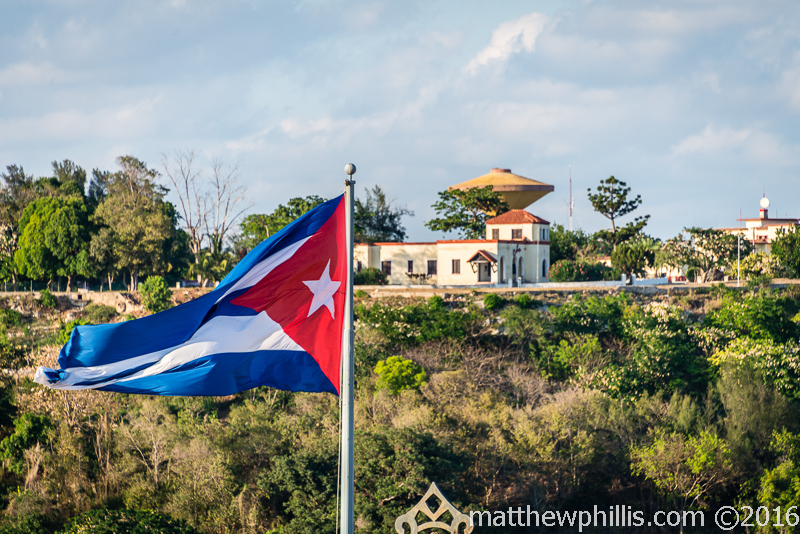
Goodbye Cuba.
So far this had taken me up to the end of March - 4 months of travelling wasn't bad, but I wanted more. My legs were stronger but I was feeling the tiredness of carrying my house around with me... and my wallet was definitely slightly lighter. I crossed the border into Colombia and immediately knew this was the right decision - Bogota and Popayan being the real treats for me here. So many friendly people in Colombia, food and atmosphere no matter where you went (including being in a music video clip in Cartagena!), I fell in love with the country and started to wish I'd moved here to teach rather than Chile (Sorry Conce!). To top things off, after a month and a bit in Colombia, I headed to Cuba for 2 weeks before heading back to Europe and reality. Cuba is a country I would love to say that everyone needs to go there, but I don't want to say that about any country as the more tourists in any place kind of ruins it, but on the other hand if you are going to go, do it now or very soon as it is changing rapidly. Never before had I done such a long trip of just travelling, and maybe I won't again, but it was done and I felt younger, more energised and balanced from it like nothing else before. I was starting to think that I was too old to pack up all my belongings into a backpack (sell or give away what doesn't fit) and move to a country you've never been to before, so it would be Spain this year and nothing crazy for a while.

Nothing says "Barcelona" more than this building.
The face of Barcelona.
Barcelona is a welcoming city.
I sat on that plane, all these great times and great people replying in my head, and I felt a little sad that it was all finished. On the other hand it made me happy knowing I had made a great go of it, never said no to a new place to go and new experience, I was still in touch with a few real friends that I'd made (you know who you are) and I was ready to settle down a little and find a job, a place to live (no more hostels!!) and most importantly, get paid. I was tired, very tired - I don't know how people travel for years at a time without feeling this weariness. The feeling that you have to see something, go somewhere, take photos of some national monument in some country wears you out! I love travelling and I don't get bored of it (much prefer it to work as well), but sometimes it's important to stay in one place for a while, spend time with good friends (not ones you've just met but ones you've had for years) and even time doing nothing but sitting on a sofa and eating your own cooking. All these emotions and feeling were going around in my head and heart, I was feeling positive and happy about the future still and really looking forward to being in Barcelona again. The flight was the only bad thing though - I will never fly Aeroflot again. My meal was served after 2 hours of taking off, and I was starving, but I wasn't offered a glass of wine or even a beer. I politely asked for a cold one and the flight attendant gave me a blank look - at first I thought it was my Australian pronunciation of beer (beeeer rather than bi-er), but after saying it a few times and then asking for wine (and making a drinking sign with my hand), she told me that they don't serve alcohol on Economy Class. How rude!

Catalonia's Parliament House.
The tiny streets of Barcelona.
Barcelona Cathedral.
After 13 hours to Moscow, a wait of 4 hours at the airport and 3.5 hours back to Barcelona, I was finally home in my 2nd home. I'd never lived in Barcelona before, always being just outside the city in the wonderful village of Cardedeu, I always knew it had a vibe, a feeling about it that makes everyone want to live here. Although there are many bad things about being in the centre of the city, and I was staying in Bari Gotic, one of the oldest neighbourhoods where the streets are only wide enough for motos and the next apartment building is about 2 metres away. It's noisy - people don't seem to sleep in this country and even less in summer, drunk tourists litter the streets at all hours and to top that off a lot of streets smell like a communal bathroom in a student house without a maid. I will only talk about the good things though as I wasn't noticing the downside - I was in Barcelona! Staying with a good friend, it was like being home again - a sofa, a room to myself and a kitchen I could use and not be worried about catching some sort of hepatitis infection. It was also smack bang in the centre - a walk to everywhere. Being slightly jet-lagged, due partly to the bad connection on my flight and part to the ridiculous no booze in cattle class policy, I didn't sleep my first night and decided to head out and see things in the early morning light. I strolled down to the beaches of Barceloneta, something I had never really done before. It was nice to refresh in the water and have a swim, although the water is far to calm for me (I'm Australian so I need waves and the risk of drowning or being eaten by s shark), it was great to soak up the sun and enjoy the view. After being in Chile for a year (cold water at every beach) and travelling around South America inland, I hadn't seen a real bikini for some time and here in Spain girls don't bother to much with the top half - ahhh Barcelona!

The beaches of Barceloneta on the 1st of June.
Placa Espanya.
The Arc de Triomf.
Over the next week or so I walked around the city, rediscovering places or even find brand new things. Barcelona is full of mystery, little pockets of the city and backstreets that you just have to find on your own. Luckily I'm a great tour guide so I found the best places. The Barcelona Cathedral should always be on the list if you haven't seen it before, but it's always worth another visit. Sitting right in the middle of the city, this huge Gothic structure was built between the 13th and 15th Centuries and is always full of tourists. You can climb to the roof and see the famous gargoyles or just sit in the plaza in front and watch the 'guiris' take selfies. Wandering through the medieval streets you can see so many things, from graffiti and street art to cool cafes, bars and eateries, but don't forget to look up and notice the architecture too. If you want to see a truly impressive church, head for the Santa Maria del Mar (Saint Mary of the Sea). Built in the 14th Century with the aid of the guilds of the city lending manpower, it's different from most churches due to it's shape - although Gothic, it doesn't have the 't' or cross shape that most churches do, instead it's a kind of elongated 'D' shape with the pillars forming 3 aisles. The stained glass inside is worth a visit alone, along with the very tall and thin columns soaring to the ceiling. There are so many beautiful things to see in this city, the Arc de Triunfo, the Palau de la Musica (Music Palace), Casa Batllo (one of Guadi's designs) and so many 'normal' buildings that run along the Passeig de Gracia, the main road from Placa Catalunya and the neighbourhood of Gracia. Walk, explore, get lost and find your way again but just enjoy the sights.


Montjuic and the National Museum.
The roof of Gaudi's Casa Batllo.

Tibidabo and the church on top.
Somewhere always fun to walk to is Montjuic, a hill near Placa Espanya. You get out of the metro stration and you are in one of the busiest roundabouts in the city, a converted Plaza de Torros (now used for concerts as bull fighting is illegal in Catalonia) and the National Museum of Catalonia looking down on you from the hill. During certain times in the year you can come here and see the 'Magic Fountain' of Montjuic, a colour and music show with the fountains, but even at any other time of the year it's still a beautiful place to see. You walk up the stairs either side of the fountain which runs in the middle, it's a great view of the Museum and water and I couldn't help myself and stop at every intersection to take (more) photos, just like everyone else. Once you reach the top you have to side-step the junk-sellers (or wait for the cops to come and then they're gone) and people with selfie sticks, but the view is worth it - right over the cascading water, over the square and traffic, further past the city and right up the mountain to Tibidabo, the highest mountain around Barcelona. On top of this mountain, which you can climb and get a view back towards the city and the Mediterranean, sits the Tibidabo Amusement Park along with The Temple Expiatori del Sagrat Cor (Expiatory Church of the Sacred Heart of Jesus). The construction of the church started in 1901 with the crypt and finally finished with the towers in 1961 - the Catalans take their time building it seems, just like the Sagrada Familia, which is still under construction.


Fruit on a church? Si señor!
Columbus pointing the way.
Gaudi's UNESCO church.
The most famous church in Barcelona, and probably one of the most in the World, standing alongside the Hagia Sophia in Instanbul, St Paul's in Rome and Notre Dame in Paris, in Antoni Guadi's Sagrada Familia. Construction started in 1882 and in 1883 Gaudi became involved - taking over the project and transforming it with his architectural and engineering style, combining Gothic and curvilinear Art Nouveau forms. Sadly he died in 1926, hit by a tram while crossing Gran Via, at the age of 73 (it's a dangerous road but now the motos and taxis are the main concern), leaving his greatest project less than a quarter finished. The church suffered delays due to the Civil War and work started again slowly in the 50s. In 2010 the Sagrada Familia was declared 'half-way done,' and a projected end date of 2026 was proclaimed, just in time for the 100th anniversary of the architect's death. It is a wonderful building, wether you like it or not, and even though it's unfinished it's still a UNESCO site. There are two main sides to it, the 'Nativity' facade and the 'Passion' facade - the former telling the story of Jesus, his birth and deeds, and is the oldest part of the church and personally overseen my Gaudi himself. The newer side, clearly seen by the colour and condition of the stone, tells of Jesus' death and crucifixion - it is far more rigid and square than the flowing North East side of the birth. My favourite side is the oldest part, but there are elements of the newer part I like too - there is always the towers and the fruit, something that probably shouldn't be on a church, but somehow it works.


The city skyline from Montjuic.
Goodbye (for now) Barcelona.
The arches of Old Barcelona.
Barcelona is a great city to hang out in and even live in. I enjoyed my time here in June, relaxing after my trip and rediscovering a city which I had never really lived in before but had visited many times. They say 'absence makes the heart grow fonder,' and I think in case it's true - I never really loved this city before. I could appreciate it, admire it, but never really loved it - coming back I think I have realised what I knew to be true all the time - we do have feelings for each other. It was also great catching up with friends, going out and seeing them in the heart of the this Catalan city, then walking back early in the morning to go home without the need for a bus, train or GPS even. Ever since the 1992 Olympics, which put this city on the map, Barcelona has continued to grow in popularity and shouldn't be missed - my advice is to come here in June or even September if you want warm weather, August is just far too busy. After a month here I was on my way to Romania for a Summer Camp in the mountains just outside of Bucharest. I could have worked here for July but I figured why not go somewhere new and different - and I was being paid for it too! It would be my first Summer Camp in a long time, my first time to Romania and my first time working since November.


New Zealand Southland - Part 2

 Live the van life while you have it – no regrets The landscape on the South Island is simply stunning The view from Mount Cook road This wa...